Purpose: Why Integra Smart Contracts Exist
The Problem We Solve
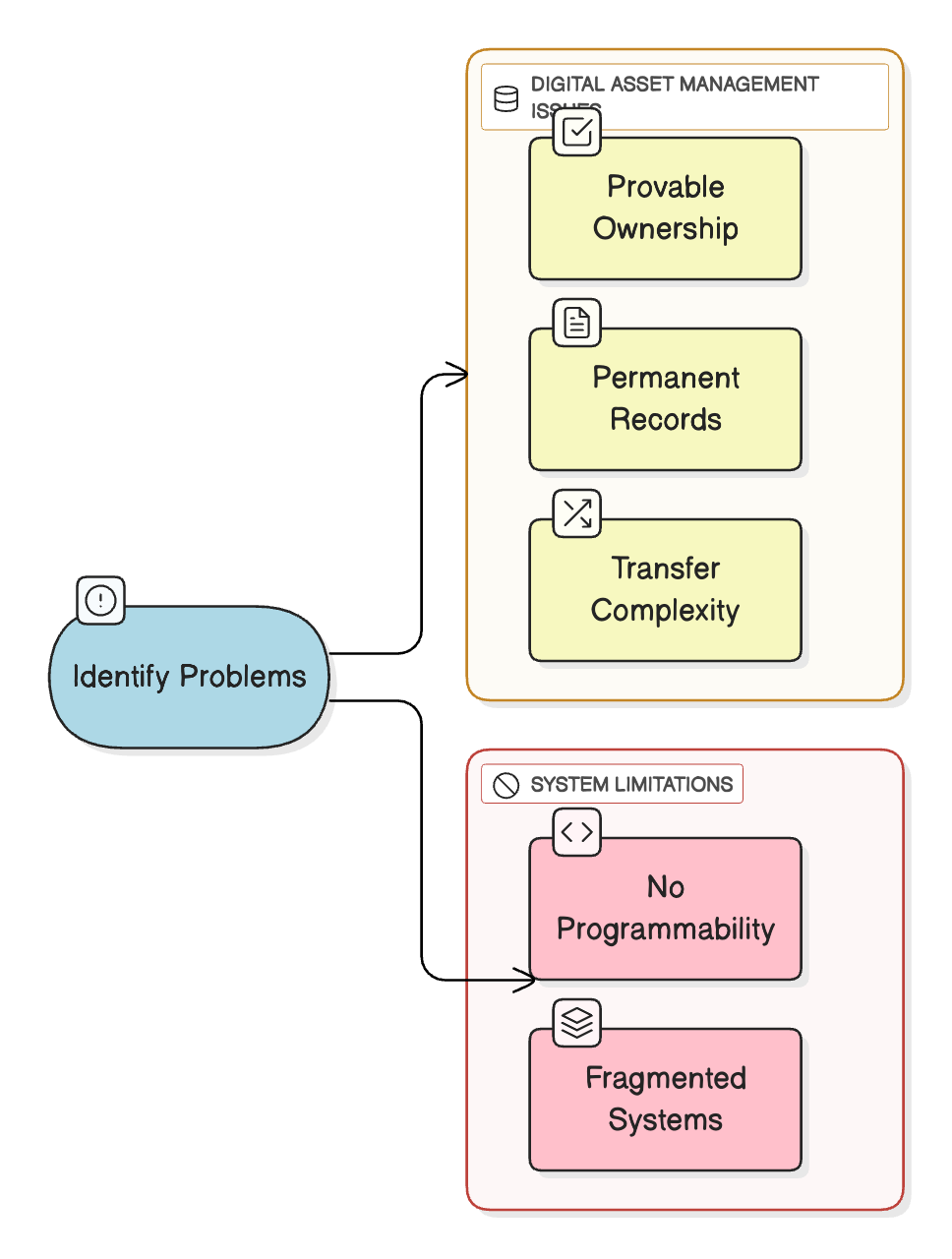
Real-world documents and assets exist in physical or digital form, but they lack several critical capabilities:
1. Provable Ownership
When you own a physical deed, contract, or certificate, proving ownership requires showing the original document. Digital files can be copied infinitely, making true ownership impossible to prove.
2. Permanent Records
Documents get lost, damaged, or destroyed. Centralized databases can be hacked, shut down, or manipulated. There’s no truly permanent, tamper-proof storage for critical records.
3. Transfer Complexity
Transferring ownership of real-world assets requires lawyers, notaries, title companies, and weeks or months of paperwork. The process is expensive, slow, and error-prone.
4. No Programmability
Traditional documents are static. They can’t automatically execute actions, enforce rules, or trigger payments based on conditions.
5. Fragmented Systems
Every organization has its own database, format, and process. Nothing talks to anything else. Integration is painful and expensive.
Our Solution: Real World Contracts (RWC)
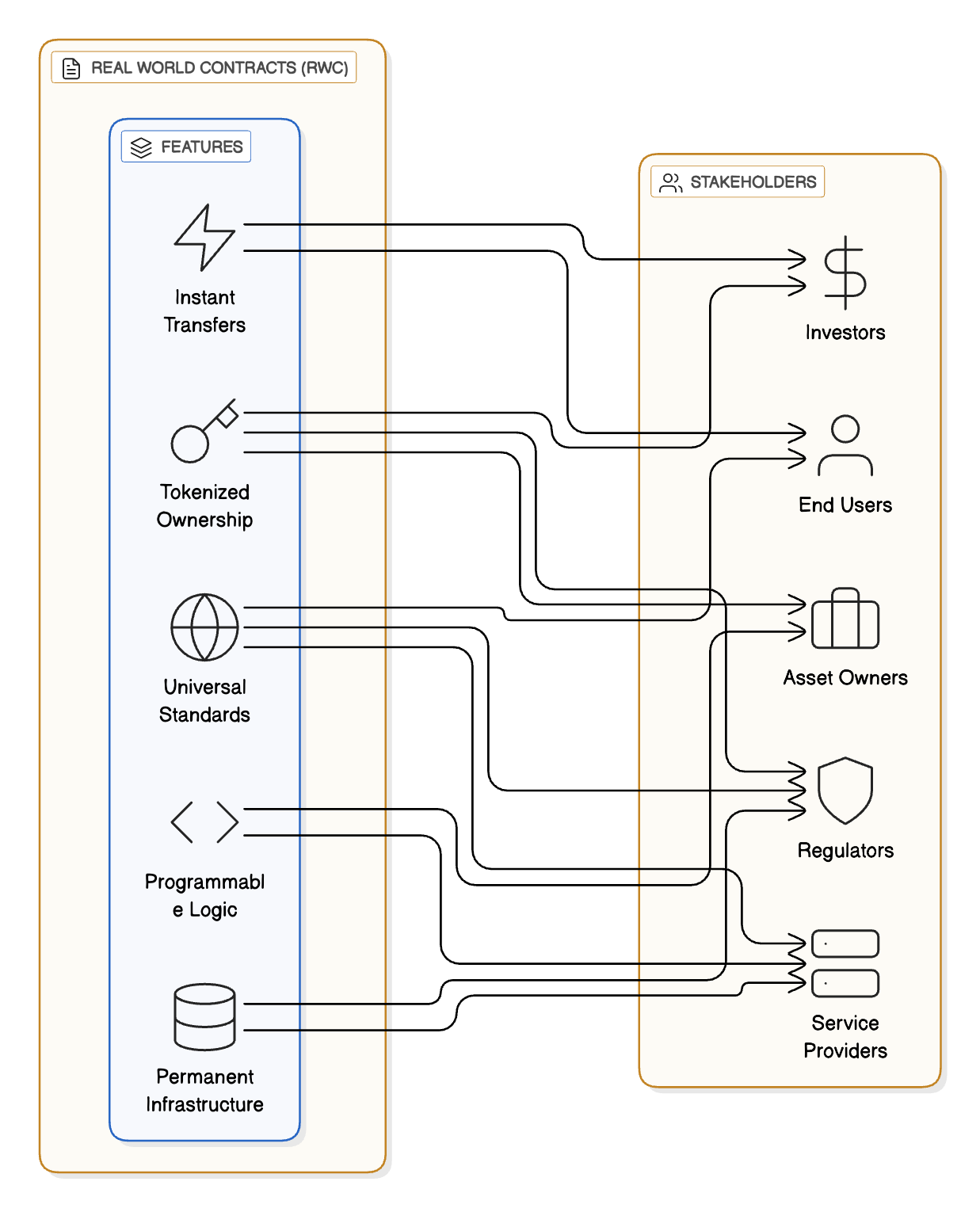
Integra smart contracts bridge the gap between the physical world and blockchain by providing:
Tokenized Ownership
Every document or asset becomes a unique token on the blockchain. This token represents verifiable, transferable ownership that anyone can verify but only the owner can control.
Real Estate Deed → NFT Token → Cryptographically Verifiable OwnershipPermanent Infrastructure
Our foundation contracts are immutable - they cannot be changed, shut down, or manipulated. Once deployed, they exist permanently on the blockchain, providing stability for decades to come.
Instant Transfers
Transfer ownership in seconds instead of weeks. No intermediaries, no paperwork, no delays. Just cryptographic proof of transfer on the blockchain.
Programmable Logic
Smart contracts can automatically:
- Collect rent payments
- Distribute royalties
- Enforce terms and conditions
- Trigger workflows based on events
- Execute complex multi-party agreements
Universal Standards
We use proven ERC standards (ERC-721, ERC-1155) so tokens work everywhere - wallets, marketplaces, dApps. Build once, work everywhere.
Who Benefits?
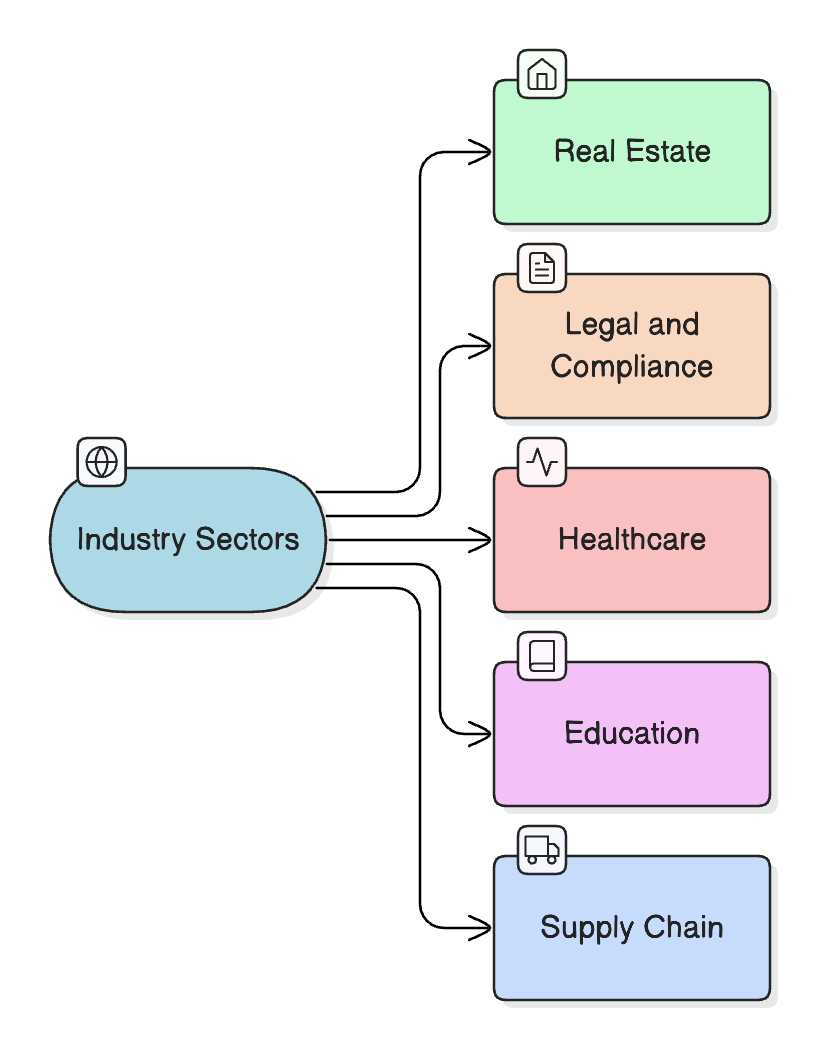
Real Estate
- Property Owners: Prove ownership instantly, transfer without intermediaries
- Renters: Automated rent payment, verifiable rental history
- Investors: Fractional ownership, instant settlement
Legal & Compliance
- Law Firms: Automated contract execution, immutable records
- Notaries: Digital notarization with blockchain verification
- Regulators: Transparent audit trails, compliance automation
Healthcare
- Patients: Own your medical records, control access
- Providers: Verified credentials, instant access with consent
- Researchers: Privacy-preserving data sharing
Education
- Students: Verifiable credentials that never expire
- Institutions: Tamper-proof transcript issuance
- Employers: Instant credential verification
Supply Chain
- Manufacturers: Product authenticity, provenance tracking
- Distributors: Automated documentation, chain of custody
- Consumers: Verify product authenticity
Core Principles
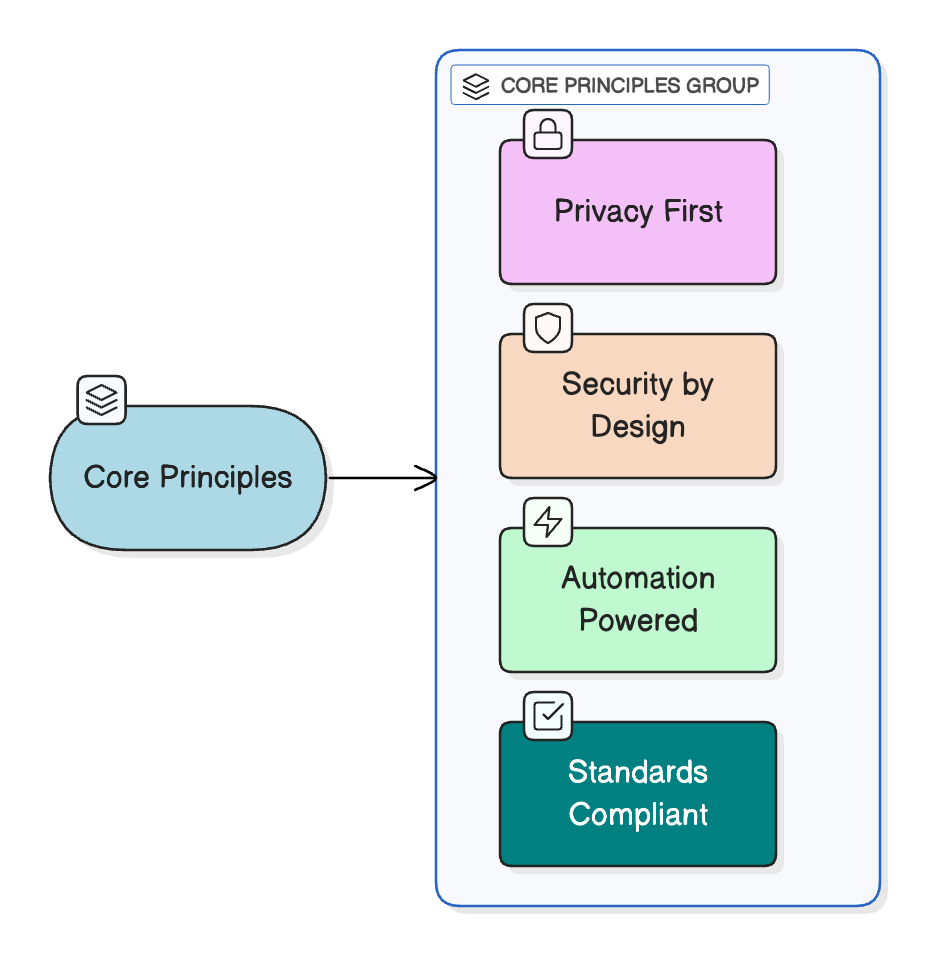
1. Privacy First
Not everything belongs on a public blockchain. We provide:
- Selective Disclosure: Share only what’s necessary
- Encrypted Metadata: Sensitive data stays private
- Zero-Knowledge Proofs: Prove facts without revealing data
2. Security by Design
Security isn’t added later - it’s built into every layer:
- Formal Verification: Mathematical proof of correctness
- Professional Audits: Multiple independent security reviews
- Battle-Tested Patterns: Based on proven industry standards
3. Automation Powered
Smart contracts eliminate manual processes:
- Trustless Execution: Code runs exactly as written
- 24/7 Operation: No downtime, no holidays
- Instant Settlement: No waiting for business hours
4. Standards Compliant
We build on proven standards:
- ERC-721: Non-fungible tokens for unique assets
- ERC-1155: Multi-token standard for flexibility
- EAS: Ethereum Attestation Service for verifications
Learn more about ERC Standards →
The Integra Difference
Permanent Foundation
Our core contracts are immutable. They’ll work the same way in 10, 20, 50 years. This provides unprecedented stability for long-term assets.
Progressive Decentralization
We start with practical governance and move toward community ownership. The path is clear and intentional.
Enterprise Ready
Not a prototype or experiment. Production-grade contracts with:
- Comprehensive documentation
- Professional audits
- Formal verification
- 24/7 monitoring
Developer Friendly
Beautiful code with extensive documentation:
- Full NatSpec comments
- Integration examples
- Testing frameworks
- Support and community
Real-World Impact
Example: Real Estate Transfer
Traditional Process:
- Hire real estate agent (weeks)
- Negotiate terms (weeks)
- Title search (weeks)
- Escrow process (weeks)
- Legal review (weeks)
- Closing (days)
- Recording (days)
Total: 2-3 months, $5,000-$15,000 in fees
With Integra:
- List property (minutes)
- Accept offer (instant)
- Transfer token (seconds)
- Update records (automatic)
Total: Minutes to hours, minimal fees
Example: Credential Verification
Traditional Process:
- Request official transcript ($25, 1-2 weeks)
- Mail to employer (3-7 days)
- Employer verifies with institution (1-2 weeks)
Total: 3-5 weeks, $25-50
With Integra:
- Share credential link (instant)
- Employer verifies on blockchain (instant)
Total: Seconds, free
Looking Forward
We’re building permanent infrastructure for the next century of real-world assets on blockchain. Our contracts are designed to:
- Scale to billions of documents
- Adapt to new use cases through our service layer
- Integrate with existing systems and emerging protocols
- Endure through market cycles and technological change
Next Steps
Ready to dive deeper?
- Understand Privacy: How we protect sensitive data →
- Explore Security: Our security architecture →
- See Automation: Smart contract capabilities →
- Learn Standards: ERC token standards →
- Technical Details: Architecture overview →
Building permanent infrastructure for real-world contracts on the blockchain.